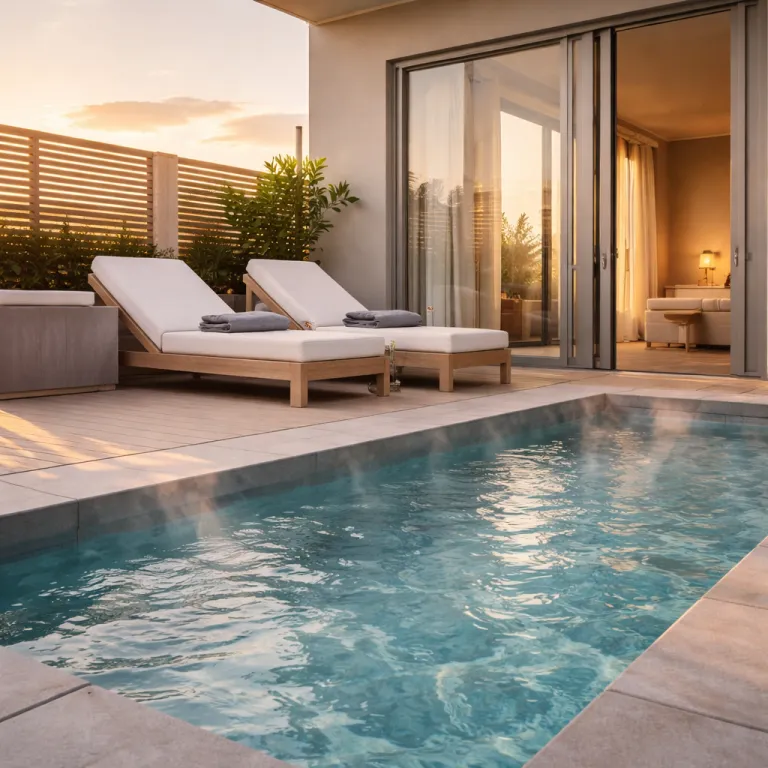
Why pool temperature turns a nice extra into the main event
A heated private pool hotel stay is not about the photo; it is about daily immersion. When the water in your private pool sits between 26 and 28 °C, the swimming pool becomes part of your routine rather than a cold ornament you admire from the room. Below that threshold, many couples use their pool room once, smile bravely for a picture, then retreat to the spa or the bar.
Think about your last stay in a luxury hotel where the villa’s private terrace looked perfect, yet the outdoor pool felt closer to a plunge into the Atlantic than a romantic soak. On cool evenings on the beach in South Africa or in the breezy hills above Costa Rica, unheated pools in even the best hotels often hover around 22 °C, which is refreshing for a quick dip but rarely tempting for night swimming. Heated pools at around 27 °C, especially when paired with a hot tub or steam bath, invite you back after dinner, when the resort is quiet and the sky is dark.
For couples, that difference in degrees is the difference between a feature and a ritual. In a heated private pool hotel, you wake, slide open the hotel room doors and step straight into warm water before breakfast. At night, you check the stars from your pool suite, the only sounds the circulation system and the faint hush of the sea if you booked one of the hotel villas near the shore.
How to read between the lines of pool promises
Most hotels’ private marketing copy will mention plunge pools or villa pools, but very few will commit to a specific temperature. When you care about using that pool every day, you need to ask targeted questions before you book any heated private pool hotel stay. The most important is simple: “Is the private pool in my suite heated to at least 26 °C, and during which months?”
Always check whether “seasonally heated” means shoulder season or only peak summer, because policies vary widely between a resort in Sri Lanka, a cliffside property in Bora Bora, and a coastal retreat in Costa Rica. Some luxury hotel teams heat only the main outdoor pool, leaving the pool suites and villas with unheated water that feels bracing outside high summer. Others specialise in fully indoor pool suite layouts where the room pool is heated year round for couples who want privacy and predictable comfort.
When you email or call, ask whether the hotel rooms with private pools have individual controls or a central system. Clarify if there is a surcharge to heat a villa’s private pool, and whether that applies per night or per stay, because this can change the value equation even at the best hotels. For inspiration on how to weigh these details against other romantic stay factors, use a simple decision framework that helps you prioritise terrace design, privacy, and water temperature when choosing a private pool villa for a romantic escape.
Destination realities ; where you can rely on the sun and where you cannot
Not every heated private pool hotel needs heavy engineering to keep the water inviting. In equatorial regions like parts of Sri Lanka or lowland Costa Rica, a well oriented outdoor pool can sit at 28 °C without any mechanical help for much of the year. In contrast, a cliffside villa in the Cyclades or a star rated resort in South Africa facing the open ocean may see its pools drop below 24 °C whenever the wind picks up.
In the Mediterranean, spring and autumn are the real stress tests for any private pool. A hotel in Crete or a masseria in Puglia can advertise private pools and pool suites, yet from late October to early April, unheated water often feels too cold for lingering, especially at night. That is why new openings in southern Europe are investing in heating systems for every pool suite and villa’s private terrace, recognising that couples want to use their hotel room pools beyond the narrow high season.
Tropical islands add another layer of nuance. In Bora Bora, overwater villas with private pools sit above lagoon water that can cool quickly when trade winds strengthen, so a heated private pool hotel there is not redundant at all. Architects increasingly design hotel villas where the outdoor pool visually merges with the landscape, a trend explored in depth by designers who study how architects dissolve the line between water and wilderness, yet the most successful projects pair that visual drama with reliable warmth.
To put these differences in context, here are typical outdoor private pool temperature ranges without heating (approximate values):
- Mediterranean (Crete, Puglia): 20–23 °C in April–May and October; 25–28 °C in June–September
- Tropical lowlands (Sri Lanka, Costa Rica): 26–29 °C most of the year, dipping to 24–25 °C in rainy or windy periods
- Wind exposed islands (Bora Bora, Cyclades): 23–25 °C in shoulder seasons; 26–28 °C in calm high summer weeks
- Ocean facing coasts (South Africa): 20–23 °C outside midsummer; 24–26 °C in the warmest months
Iconic heated pool suites that understand privacy and temperature
Some properties already treat the heated private pool hotel concept as a core promise rather than a vague amenity. Certain boutique hotels have built their reputation on fully enclosed pool suites where couples step from bed to room pool without crossing a corridor, and the water is heated for year round use. The result feels more like a private spa than a standard hotel room, with no need to check who might be watching from neighbouring balconies.
In Greece, several all suite hotels on Kos Island offer generous suites with heated private pools, pairing spacious interiors with outdoor terraces that feel genuinely secluded. On Santorini, many contemporary cave suites and villas line the caldera, with a private pool or hot tub that faces the sea yet remains shielded from direct view. These hotels’ private layouts show how thoughtful architecture can deliver both privacy and warmth, avoiding the common trap of a pool private enough on paper but visible from a passing path.
Guests consistently reward this attention to detail. In online reviews, couples frequently mention the comfort and privacy of the swimming pool, especially when they can use it at night without feeling overlooked. When you read guest feedback for any luxury hotel, filter specifically for mentions of pool temperature, night swimming, and whether the private pools were actually used daily, not just admired from the terrace.
Sustainability, night swimming and the future of heated private pools
The old argument against the heated private pool hotel model was energy use. That is changing fast as resorts adopt solar thermal panels, high efficiency heat pumps, and even geothermal loops to keep each outdoor pool at a stable temperature. Geothermal and solar heating systems are reducing the energy cost of pool heating, making year round heated pools more common, especially in destinations with strong sun but cool evenings.
For couples, the payoff is most obvious after dark. A villa’s private terrace with a 27 °C pool and a nearby hot tub becomes the natural place to end the evening, especially when the main hotel pools are closed and the beach is quiet. Night swimming in your own pool suite feels different from a daytime dip; the water reflects only candlelight and stars, and the rest of the resort fades into background silence.
As more of the best hotels invest in efficient systems, expect to see clearer temperature commitments in hotel reviews and on booking pages. A credible luxury hotel will soon list not only room sizes and spa menus, but also typical temperatures for hotel rooms with private pools in different months. For travellers who care about using every square metre of their hotel villas, that level of transparency will become as important as Wi Fi speed or check in flexibility.
Frequently asked questions about heated private pool stays
How can I confirm that my private pool will be heated ?
Always contact the hotel directly by email or phone and ask whether the private pool in your specific room category is heated, to what temperature, and during which months. Clarify whether the heating applies to all pool room types or only certain suites and villas. Request the information in writing so you can refer back to it if the water feels colder than promised.
Here is a simple email script you can adapt:
“Dear [Hotel Name], I am interested in booking [room category] for [dates]. Could you please confirm whether the private pool in this room is heated, the typical water temperature range, and the months during which heating is guaranteed? Also, let me know if there is any additional charge for pool heating. Kind regards, [Your Name].”
Are heated private pools available year round ?
Many properties now heat at least some private pools throughout the year, especially in cooler destinations or for indoor pool suites. However, some hotels only heat water during peak season or when outside temperatures drop below a certain point. Always check the pool heating schedule in advance, because “seasonally heated” can mean very different things from Sri Lanka to South Africa.
Do heated private pool suites cost significantly more ?
Suites and villas with heated pools usually sit near the top of a hotel’s room categories, so nightly rates are higher than for standard hotel rooms. Some resorts also charge a daily supplement to heat a villa’s private pool, particularly in cooler months. When comparing options, factor in how often you plan to use the pool, because frequent use can justify the premium over a similar room without a swimming pool.
What other amenities pair well with a heated private pool for couples ?
For romantic stays, look for a combination of a heated private pool, a hot tub or whirlpool, and direct access from the bedroom to the terrace. A good spa on site, quiet beach access, and thoughtful in room dining can turn your pool suite into a self contained retreat. Check guest reviews for mentions of privacy, noise levels, and how staff handle special requests such as late night room service by the pool.
Is a heated private pool still necessary in tropical destinations ?
In some tropical regions, an outdoor pool may stay warm enough without heating, especially during the hottest months. However, wind, rain, and shoulder season temperatures can still cool the water, making a heated private pool hotel attractive even in places like Costa Rica or Bora Bora. If night swimming and year round comfort matter to you, ask about typical water temperatures month by month rather than assuming the climate alone will keep your pool warm.