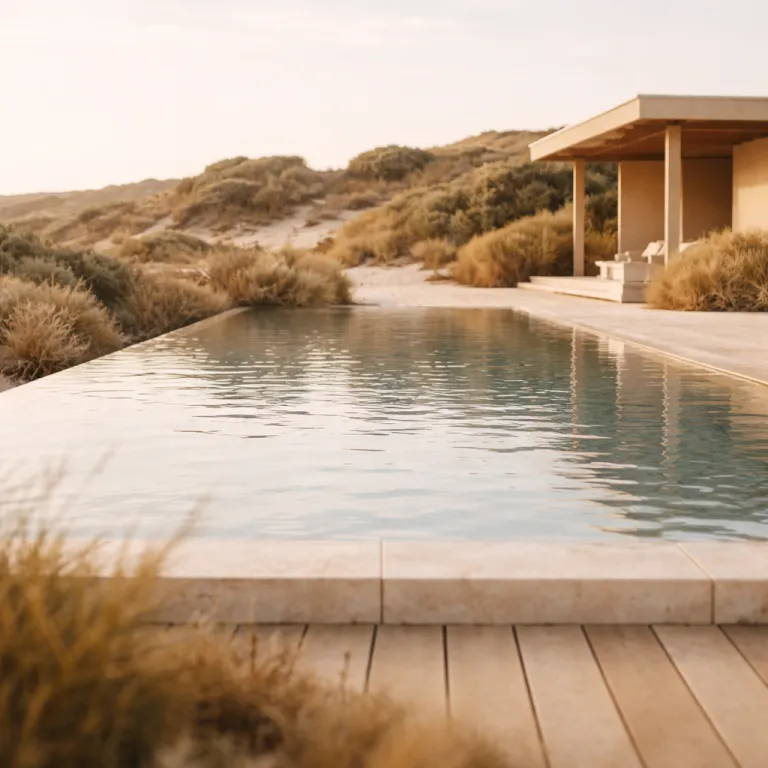
The quiet revolution in private pool hotel architecture design
Private pool hotel architecture design is undergoing a quiet but radical shift. Where the swimming pool once shouted for attention at the heart of every resort, the most interesting architects now let water recede into rock, forest, and roof lines until it feels like part of the land itself. For travelers choosing a luxury hotel or villa, this change alters how privacy, romance, and value are experienced in every room and every view.
The data explains why the industry is listening so closely to this new language of water. A 2022 briefing from the Luxury Hotel Association, summarizing member surveys across Europe, Asia, and North America, estimates that roughly one third of upscale properties now offer some form of private pool. Several Hospitality Trends reports, including a 2021–2023 series on resort amenities, point to demand for secluded swimming experiences rising by around 20 % over the last decade. These widely cited figures, while based on aggregated survey data rather than a single census, help explain why every resort design team is rethinking how a pool can be both amenity and landscape. This is not about adding another hotel pool or a flashy pool resort wing; it is about reimagining architecture so that a private pool feels inevitable, like a natural extension of the bedroom, the terrace, or even the roof.
Architects and hoteliers now talk less about pool luxury as a status symbol and more about how water can soften edges between inside and outside. Contemporary private pool hotel design uses terraces, courtyards, and semi indoor spaces to blur the line between a house and its house pool, between a villa and its villa pool, between a tropical resort and the forest that surrounds it. The most successful pool villas and pool resorts now feel like tiny house compounds or beach house pavilions, where each swimming pool is tuned to climate, light, and the couple’s need for seclusion.
Two studios illustrate this shift with precision rather than spectacle. Vaslab Architecture, for example, shaped the MASON Pattaya resort (completed in 2019) so that each private pool villa steps down towards the sea, using stone, shadow, and low walls to hide water from neighboring villas while keeping the horizon open. GS DESIGN, working on the Lanxi Tangquan Bubble Pool Hotel in Zhejiang, documented in Chinese hospitality design press around 2020, organized rooms around a central courtyard swimming pool, then layered screens, vegetation, and subtle level changes so that guests feel connected to water without sacrificing the sense of a private room or private terrace. Both projects are documented in regional hospitality design publications, which confirms the emphasis on privacy, topography, and material continuity.
These projects sit within a broader timeline that every serious traveler should understand. Early private pool villas in the 2000s treated the swimming pool as an add on, often a rectangle bolted onto a standard resort bedroom or a generic beach resort suite. Over the following decade, hotel architecture began to integrate the hotel pool into the structure itself, and the current era pushes further, using local materials, sustainable construction, and landscape driven design ideas so that each private pool, each villa pool, and each house pool feels specific to its site.
For couples planning a romantic escape, this evolution changes how to read hotel photography and floor plans. A dramatic rooftop swimming pool or a huge beach resort lagoon can still be thrilling, but the most intimate experiences now come from pools that almost vanish into the architecture, whether in a villa in Bali Indonesia, a tropical resort in Thailand, or a reimagined stone house on a Mediterranean cliff. When you browse curated collections such as the refined stays on private-pool-stay.com, you are really comparing philosophies of water, not just square metres of pool surface.
From feature to landscape: three schools of invisible pool design
Look closely at the most compelling private pool hotel architecture design and a pattern emerges. The pool is no longer a blue rectangle framed by tiles; it is a carved void in rock, a mirror at forest floor level, or a thin line at the edge of a roof. These three schools — rock integration, forest floor immersion, and rooftop infinity — now define how serious resorts and villas think about water, privacy, and architecture.
Rock integrated pools dominate the Mediterranean and Aegean, where stone is both structure and story. Properties like Crete’s cliffside retreats use carved terraces so that each private pool appears to spill directly into the sea, while thick walls and split level bedrooms keep neighboring villas invisible from your sunken daybed. Here, the swimming pool reads as part of the geology, and a couple can float at dusk with only the horizon and the sound of waves, not the chatter of a busy hotel pool deck.
Forest floor pools, common in Southeast Asia and especially around Bali Indonesia, take the opposite approach. Instead of cutting into rock, architects lower the villa pool until it sits flush with the surrounding vegetation, so that a private pool feels like a clearing in the jungle rather than a constructed object. In the best villas Bali has produced, the bedroom opens directly to a narrow swimming pool, often around 2.5 m by 7 m, the roof is kept low, and the view is filtered through palms and ferns, creating a tropical sense of enclosure that feels more like a tiny house in the canopy than a conventional resort suite.
Urban rooftop infinity pools form the third school, and they are more nuanced than the Instagram clichés suggest. The most thoughtful hotel pool designs now treat the roof as a quiet platform, where a slim swimming pool runs along the edge of a handful of pool villas or top floor suites, shielded from other rooms by planters, screens, and careful level changes. Instead of a loud sky bar, you get a private roof terrace where the pool luxury is measured in silence, skyline reflections, and the ability to step from bedroom to water without crossing a public corridor.
For couples choosing between a beach house, a villa in Bali, or a city hotel, understanding these schools helps match mood to setting. Rock integrated pools suit travelers who want drama with seclusion, forest floor pools appeal to those who crave a tropical resort cocoon, and rooftop pools work for guests who want urban energy but a private retreat above it. When you browse refined hotel suites with private plunge pools, such as those highlighted in this guide to elegant escapes in hotels with private plunge pools for refined travelers, look for how each pool relates to land, light, and neighboring rooms, not just its size or shape.
What unites these approaches is a refusal to treat the pool as a separate amenity. Instead, contemporary private pool hotel architecture folds water into circulation routes, bedroom layouts, and landscape views, so that every movement — from shower to terrace, from room to roof — passes by or through water. This is why the best resort ideas now start with the position of the swimming pool and only then define where the villas, the house like suites, and the shared spaces will sit around it.
Why invisible water feels more private than walled off pools
Many travelers still assume that the most private pool is the one most enclosed by walls. In practice, the opposite is often true, because a high walled house pool or courtyard swimming pool can amplify sound, trap heat, and make you feel watched even when nobody is there. Landscape integrated private pool hotel architecture uses distance, elevation, and sightline control to create a deeper sense of seclusion than any opaque fence.
Architects working on contemporary pool resort projects start with view analysis rather than fence heights. By staggering villas, rotating bedroom wings, and using planted berms, they ensure that each private pool, each villa pool, and each roof terrace is shielded from direct sightlines, even if the space remains visually open to the sea, the forest, or the city skyline. This is how a tropical resort can offer a luxury beach panorama from every room while still allowing couples to swim, sunbathe, or dine by their pool without feeling observed.
Guest psychology backs this approach. Environmental psychology studies consistently show that people relax more quickly when they can see out but not be seen in, which is why a beach house perched above the sand often feels more private than a tiny house squeezed into a courtyard with a high wall. As one resort architect interviewed in a 2021 hospitality design case study put it, “If guests can read the horizon while knowing their own silhouette is hidden, their shoulders drop within minutes.” When a hotel uses careful architecture and resort design to frame the swimming pool with long views and soft edges, the brain reads the space as expansive and safe, reducing stress and deepening the sense of escape.
Invisible pools also change how couples use time. Instead of scheduling a quick dip before other guests arrive at the hotel pool, you can move between bedroom, living room, and water at your own rhythm, whether in a villa in Bali Indonesia, a hillside resort in Europe, or a compact city suite with a narrow roof pool. This constant, low friction access to water is what turns a standard room into a genuinely luxurious pool villa, and it is why private pool stays command a premium that many guests now consider justified.
From an operational perspective, this design philosophy aligns with sustainability and adaptive reuse. Many new resorts and converted houses integrate pools into existing structures, using local stone, timber, and passive shading so that each swimming pool requires less energy to heat or cool, and less chemical intervention to stay clear. As one industry FAQ from a major hotel group puts it without exaggeration, “Many adopt sustainable practices and use local materials,” a claim echoed across multiple hospitality design case studies.
For travelers comparing options on curated platforms, the key is to read beyond the phrase “private pool” in the room description. Look for plans and photos that show how the pool relates to the landscape, how far it sits from neighboring villas, and whether the roof lines, planting, and level changes support real privacy. Collections such as this guide to elevating your escape with a refined hotel suite featuring a private pool are useful precisely because they filter for properties where architecture, not just marketing language, delivers on the promise of seclusion.
How to choose your pool: drama, discretion, and real world trade offs
Not every trip calls for a disappearing pool, and not every couple wants the same balance of drama and discretion. The most sophisticated private pool hotel architecture design acknowledges this by offering a spectrum of experiences, from theatrical hotel pool decks to hushed villa pools hidden among trees. Your task as a traveler is to decide where on that spectrum your next escape should sit.
There are moments when a visible, statement making swimming pool is the better choice. If you are planning a multi generational stay or a celebration with friends, a central pool resort layout with a large swimming pool, a lively bar, and easy access from many rooms can create the social energy you want, especially at a beach resort where the line between sand and deck is deliberately blurred. In these cases, you might still book a private pool villa or one of several pool villas for your group, but you will value the shared architecture of the main pool as much as the seclusion of your own terrace.
For a romantic trip, the calculus usually shifts. Couples often prefer a smaller house like villa or a compact beach house style suite where the private pool sits just beyond the bedroom, with a partial ocean view or a framed garden scene instead of a full resort panorama. Here, design ideas such as sunken seating, integrated daybeds, and shaded roof pergolas matter more than sheer pool size, because they determine how comfortably you can spend long, unhurried hours by the water.
Destination also shapes the right choice. In Bali Indonesia, for example, villas Bali wide often cluster along ridges or rice fields, so the most successful resort ideas use split level architecture to keep each villa pool out of sight from the next, while still opening the room to breezes and layered tropical views. In denser urban settings, a slim roof pool shared by a handful of suites can feel more luxurious than a cramped private plunge pool wedged into a light well, because the skyline and sense of height amplify the experience.
When evaluating options on a curated booking platform, apply a simple checklist. First, confirm whether the pool is genuinely private or partially shared, and whether it is a full swimming pool, a compact plunge pool, or more of a decorative water feature. Second, study how the architecture handles transitions between bedroom, bathroom, and terrace, because awkward circulation can make even a generous villa pool feel like an afterthought rather than the heart of the room.
Finally, weigh the premium you are paying against how often you will realistically use the water. If you are visiting a tropical resort during the rainy season or a windy luxury beach destination, a partially covered house pool or a sheltered villa pool may offer better day to day comfort than an exposed infinity edge. Thoughtful private pool hotel architecture design is about aligning climate, topography, and human behavior, and the most rewarding stays are those where the pool feels less like an accessory and more like the quiet centre of your temporary house.
Key figures shaping the future of private pool stays
- Around one third of luxury hotels worldwide now include some form of private pool in their inventory, according to recent summaries from the Luxury Hotel Association and similar trade bodies, reflecting how central water has become to high end resort design.
- Demand for private pool accommodations has increased by roughly 20 % in recent years, based on aggregated Hospitality Trends Report data and major booking platform analytics, which explains why more resorts are converting standard rooms into pool villas and villa style suites.
- The shift towards integrating pools into terraces, courtyards, and semi indoor spaces aligns with a broader industry move towards sustainable design and the use of local materials, as highlighted by Hospitality Design’s analysis of contemporary hotel development and multiple case studies of resort renovations.