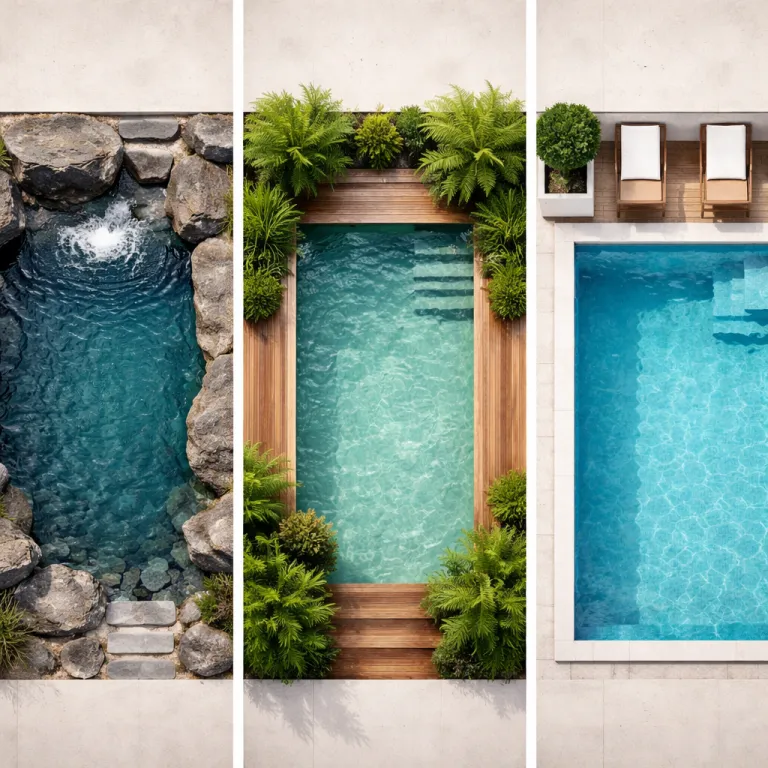
Mediterranean carved pools: stone, sea and the feeling of permanence
Stand on a Cretan terrace where the pool seems older than the villa. The water presses right up against natural stone walls, a quiet dialogue between geology, pool design and horizon that defines some of the most confident private pool concepts emerging for 2026. You feel the swimming space has been carved from the cliff rather than added to it.
Mediterranean architects work with rock, not against it, so luxury pools appear embedded in the landscape. At coastal resorts in Crete, for example, many suites and villas offer private or semi-private pools stepping down the hillside, often around 20–30 m² in surface area and typically 1.2–1.4 m deep. Each swimming pool is usually aligned so the infinity edges echo the coastline and create a sense of ancient continuity, while sustainability programmes increasingly favour local stone, seawater-assisted heat pumps and LED lighting to reduce energy use. These designs show how modern pool thinking can still feel timeless when natural stone, sea light and restrained features lead the narrative.
This first design school suits travelers who want quiet drama rather than spectacle. Families who value outdoor living will appreciate how pool decks here are compact yet generous, with sun shelves for children and integrated spas tucked into corners of the rock. The trend is towards cooler palettes, glass tile details that catch the Aegean light and LED lighting that washes the stone at night without turning the terrace into a stage.
Hotel designers, hotel owners and construction teams collaborate closely to achieve this level of integration. Architectural planning, sustainable material selection and technology integration are not marketing phrases here but daily practice that shapes every pool deck and every run of glass tile. The expected impact is simple: increased guest satisfaction, longer average stays and a competitive advantage for properties that treat each pool as part of the cliff, not just another amenity.

Tropical forest floor pools: immersion, foliage and soft-edged privacy
Shift to Southeast Asia and the private pool ideal changes completely. Here, the most interesting family-friendly pool suites for 2026 place swimming pools at canopy level, so the water feels like an extension of the forest floor rather than a separate outdoor object. You step from bedroom to terrace and the line between living space, pool deck and jungle blurs.
These modern pool designs favour organic curves, natural stone coping and pool–spa combinations that read as ponds at first glance. Integrated spas sit just off the main pool, often shaded by overhanging foliage, while LED lighting is kept deliberately low to protect nocturnal wildlife and maintain a sense of mystery. Families find that such pool trends create a softer, more exploratory experience for children, who move between sun shelves, shallow reef pool zones and deeper swimming areas without ever leaving the privacy of their villa.
Forest floor pools are less about infinity edges and more about layered features. Designers use glass tile sparingly, often in deep greens and browns, to echo river stones and make the water appear cooler and more reflective. Fire–water combinations are rare here; instead, the emphasis is on natural ventilation, smart shading and outdoor living layouts where daybeds, dining tables and small play corners sit just a few steps from the swimming pool.
For multi-generational trips or private pool hotels for groups, this design philosophy can be ideal. When you compare options using a guide to exclusive stays, look for villas where pool designs follow the terrain rather than flatten it and where integrated spas are positioned for conversation, not display. Travelers who choose this school of design are usually seeking immersion in nature, so a luxury pool that feels like a forest clearing will always beat a showpiece perched above the trees.

Urban rooftop infinity pools: altitude, skyline and curated seclusion
In dense cities, privacy rarely comes from distance; it comes from height. Urban private pool trends for 2026 respond with rooftop swimming pools that trade seclusion in nature for seclusion in the sky, often using a single dramatic infinity edge to frame the skyline. In Tokyo and other major capitals, members’ clubs and boutique hotels now favour rooftop pools roughly 15–25 metres long, heated seasonally and reserved for guests, with lifeguards on duty during peak hours and clear rules separating family swim times from adults-only evenings.
These modern pool spaces are compact but intensely designed, with every square metre of pool deck working hard. Expect glass tile interiors that keep the water bright even on hazy days, LED lighting that can shift from soft white for morning laps to warmer tones for evening gatherings and smart controls that let staff adjust temperature and filtration with precision. For families, the key question is whether the pool is genuinely private or simply semi-private behind a screen, so always read pool descriptions carefully before you book.
Urban luxury pools often pair integrated spas with fire–water features to create a sense of occasion after dark. You might see a narrow spa basin running along one edge of the terrace, its infinity edges facing the city while a linear fire element anchors the opposite side. This trend suits travelers who want the energy of the city but still value a controlled, cooler microclimate where children can swim safely and adults can enjoy outdoor living without leaving the building.
When comparing rooftop options on a refined booking platform for an elegant coastal or city escape, pay attention to how each pool design manages sightlines. A well-executed infinity edge can shield swimmers from street-level views while still opening the horizon, whereas a poorly planned design leaves you feeling observed from neighbouring towers. Urban pools reward detail-oriented travelers who care as much about privacy angles as they do about the temperature of the water.

Choosing your design school: matching pool character to family travel styles
Not every traveler dreams of the same private pool moment. Some want the elemental calm of stone and sea, others crave the sensory richness of a forest clearing and many families prefer the convenience of a rooftop pool where the elevator replaces the golf cart. Understanding these three design trends helps you align your expectations with what a property can genuinely offer.
If you are planning a multi-stop trip, think of each pool as part of your overall living rhythm. Mediterranean carved pools work best for slow mornings and late evenings, when the cooler rock and gentle LED lighting turn the terrace into an outdoor living room. Tropical forest floor pools suit days when children roam between water and garden, while urban infinity-edge pools shine on short stays where every hour in the swimming pool must earn its place in a packed itinerary.
Families who travel often become, in a sense, temporary homeowners of each suite. You start to care about how pool designs handle safety gates, how sun shelves are graded for toddlers and how smart features like automatic covers or temperature controls are explained at check-in. Ask direct questions about pool spa depths, pool deck slip resistance and whether integrated spas can be isolated from the main pool when younger swimmers are present.
Industry data shows a clear shift towards more private pool suites and more sustainable hotel designs, driven by guests who expect both luxury and responsibility. As one expert-style summary puts it, “What defines a private pool hotel suite? A hotel room featuring an exclusive pool for guest use. Are private pool suites eco-friendly? Many incorporate sustainable materials and energy-efficient systems. Do private pool suites offer smart features? Yes, many include smart controls for lighting, temperature, and entertainment.” When you read pool descriptions through this lens, you quickly see which properties treat private water as a serious design commitment and which treat it as a marketing line.
What to look for when booking: reading between the tiles and the trends
Once you understand the three design schools, the booking process becomes more precise. Start by mapping the language of each listing against the private pool styles you now recognise, noting whether the emphasis falls on rock integration, canopy immersion or rooftop spectacle. This simple filter helps you avoid the mismatch that leads to disappointment on arrival.
In photo galleries, study how the water meets its boundaries. A thoughtful luxury pool will show consistent pool design logic: natural stone in Mediterranean settings, dense planting around forest pools and clean glass tile lines in urban towers. Look for LED lighting that appears warm and even rather than theatrical, and for pool decks that offer both shaded and sunlit zones so outdoor living remains comfortable throughout the day.
Text descriptions reveal even more. Phrases like integrated spas, sun shelves and smart controls suggest a property where hotel designers, hotel owners and construction teams have worked through the details together. References to fire–water features, infinity edges or an infinity edge facing a specific landmark indicate a stronger design point of view, while vague mentions of “plunge pools” without dimensions or photos should prompt careful questions.
Before you confirm, ask the property to specify pool dimensions, swimming pool depth ranges and whether any pool spa elements are shared with neighbouring suites. Clarify how cooler months affect water temperature and whether heating is included or charged separately, as this can change the value equation for longer stays. For families, the most successful pool trends are those that balance aesthetics with function, creating spaces where children can swim safely, adults can genuinely relax and the design quietly supports the way you want to live for a few precious days.
FAQ
What defines a true private pool hotel suite for families ?
A true private pool suite gives your party exclusive use of the pool, with no visual or physical access for other guests. The swimming pool should be directly connected to your living area, ideally with a secure door so children cannot reach the water unsupervised. If any part of the pool or pool deck is shared, it is better described as semi-private.
How can I tell if a private pool is eco responsible ?
Look for mentions of energy-efficient filtration, LED lighting and sustainable materials such as responsibly sourced natural stone or recycled glass tile. Many newer properties also use smart systems to optimise heating and pump cycles, reducing energy use without compromising comfort. If sustainability matters to you, ask directly about water treatment methods, any third-party certifications and whether the hotel publishes annual environmental reports.
Are private pools suitable for young children ?
Private pools can work very well for families if the design supports safety. Features such as shallow sun shelves, clear depth markings, non-slip pool deck surfaces and the option to fence or gate the terrace make a significant difference. Always request exact dimensions and depth ranges, and never assume that a luxury pool automatically means child-friendly design.
What questions should I ask before booking a suite with a private pool ?
Ask whether the pool is heated year-round, how deep it is at both ends and whether any integrated spas or infinity edges have safety barriers. Clarify if the pool spa is fully private or shared, and whether maintenance visits will occur during your stay. Finally, request recent photos and, if possible, a simple plan showing pool size, orientation and access points so you can verify that the current design trends and features match the description.
How do smart features change the private pool experience ?
Smart controls allow precise management of water temperature, lighting scenes and sometimes even filtration schedules, which can make the pool more comfortable and efficient. For guests, this means fewer calls to staff and more control over how the outdoor living space feels at different times of day. When used well, smart systems quietly support the stay rather than turning the pool into a gadget.