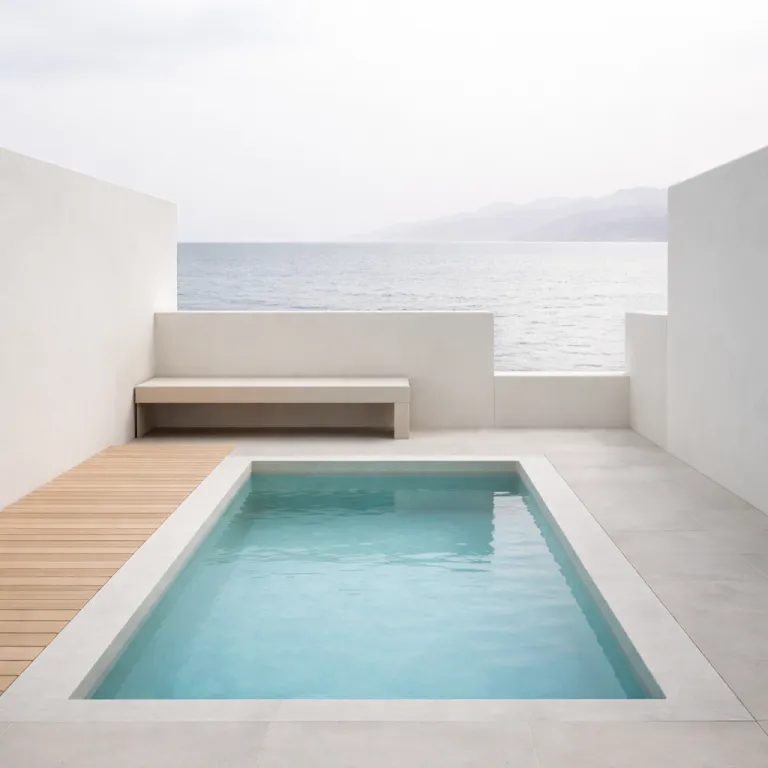
Red Sea luxury resort private pool stays at mega scale
The Red Sea is being positioned as the next great sea destination for travelers who want a Red Sea luxury resort private pool stay without compromise. Saudi Arabia is building an archipelago of resorts across more than 28,000 square kilometres of red desert, islands and reef, and the question is whether that scale can still feel intimate for guests who care about the temperature of their private pool and the silence around it. In this context, the most interesting rooms are not the headline suites but the villas where the water is yours alone, the terrace is shielded from the beach view and the only sound is the sea just beyond the edge.
On Ummahat Island and Shura Island, early openings such as The St. Regis Red Sea Resort and Miraval The Red Sea are setting the tone for what a Red Sea luxury resort private pool experience can be. The St. Regis Red Sea Resort is planned with 90 villas with private pools, while Miraval The Red Sea adds 20 more private villas with pools, and Desert Rock Resort hides its villas in the desert rock itself to keep each pool and each room sheltered from sight. According to launch materials from Marriott International and Miraval Resorts, and preliminary fact sheets from Red Sea Global, these properties show how a resort can use vast land and sea resources to space villas generously, so that private pool terraces feel more like low slung sea villas than rows of identical units pressed together.
Scale is usually the enemy of seclusion, yet here the geography of the Red Sea and the surrounding desert may flip that logic. Instead of stacking overwater villas in tight formation, planners can spread each villa along the beach or into the desert hills, giving every pool a different angle on the sea and the coral reefs. For travelers used to crowded sea international hubs, the idea of a resort where you can explore experiences across multiple islands and still return to a genuinely private pool is a powerful shift, especially when master plans published by Red Sea Global emphasise low density and protected marine zones.
For business leisure travelers extending a Riyadh or Jeddah trip, the practicalities matter as much as the dream. These Red Sea resorts are accessible by speedboat or seaplane from the Saudi Arabia mainland, and booking is handled through polished online engines where you can check availability in real time. On a well designed booking website, you should be able to filter for villas featured with a private pool, compare each villa category by size and view, and then book the exact room type that matches how you want to stay nights between meetings and reef excursions, ideally supported by clear transfer timings and visa guidance.
The tension sits in the numbers. A project that plans dozens of resorts and thousands of rooms could easily slide into volume driven thinking, where a private pool becomes a tick box amenity rather than a carefully framed experience. The properties that will stand out on any serious Red Sea luxury resort private pool shortlist will be those that treat each villa pool as a featured experience, not just another line in the offers check grid, and that back up their claims with detailed maps, terrace photography and honest descriptions of how close neighbouring decks really are.
For now, early signals are promising. The St. Regis Red Sea Resort leans into butler service, sundecks and fine dining to make each villa feel like a self contained sea destination, while Miraval The Red Sea uses its 20 pool villas to anchor a wellness narrative that stretches from the desert to the reef. Desert Rock Resort, carved into the mountains inland, shows how a resort can use the desert topography to hide pools from neighbouring villas, so that guests can enjoy the red rock view and the silence without feeling part of a crowd, a point highlighted in early Red Sea Global project briefings and concept imagery.
What genuine privacy looks like in a Red Sea private pool villa
True private pool luxury is not about the word private in the room description, it is about whether you can swim, read and work without feeling watched. On a booking website that takes this seriously, the Red Sea luxury resort private pool filter should be the start of the conversation, not the end, with detailed photography that shows sightlines from the beach, the overwater walkways and neighbouring villas. When you check availability, you should see not only the rate but also whether your chosen villa is shielded from shared paths, how far it sits from the main dining venues and how long it takes to walk to the sea, ideally supported by annotated resort maps.
On Shura Island, where SLS and other brands are planning villas with private pools, the layout will determine whether the resort feels like a quiet island or a theme park. If overwater villas are lined up too tightly, the pool becomes a stage rather than a sanctuary, and guests end up timing their swims around their neighbours’ photo shoots. The best Red Sea properties will instead use curves in the boardwalk, planting and subtle level changes so that each overwater villa pool has a different view of the Red Sea and the coral reefs, with no direct line of sight from the next deck, a design approach already referenced in Red Sea Global concept visuals.
For beach villas, the same rules apply. A Red Sea luxury resort private pool that opens directly to the sand can be magical, but only if the beach path is set back so that passing guests do not look straight into your room or terrace. When you explore offers on a high quality booking site, look for maps that show the distance between each villa and the public beach, and use that to decide whether you want to stay nights closer to the action or tucked into a quieter stretch of sand, and whether planting or low walls protect your terrace from casual glances.
Inside the villa, privacy is about more than walls. Floor to ceiling glass facing the sea is seductive, yet without thoughtful angles and screens, it can leave you feeling exposed to kayaks, paddleboards and passing boats, especially in a busy sea destination. The most successful villas featured in this new Red Sea wave will be those where architects have tested every angle from the water, the jetty and the neighbouring decks, ensuring that when you slide into your private pool you are visible only to the horizon, a standard increasingly discussed in luxury design reports and project briefings.
Service design matters just as much as architecture. A resort can promise a private pool and still break the spell if staff use the terrace as a corridor or if housekeeping appears unannounced while you swim, so the best properties train their équipe to treat pool decks as semi sacred spaces. Before you book, read how the resort describes its service rituals, and favour those that offer discreet butler access routes, in villa dining that arrives through hidden doors and digital tools that let you schedule service windows around your own rhythm, details that should be explicit in serious pre arrival communications.
For travelers who care about these nuances, it is worth reading specialist guidance on what separates a good private pool hotel from an exceptional one, because the Red Sea will quickly fill with both types. A thoughtful booking platform should curate only the latter, highlighting which villas have genuinely secluded pools, which resorts have a featured offer that bundles longer stay nights with spa time and which properties are honest about where privacy ends and the social energy of the resort begins. This is where mega developments either earn trust or lose it, and where guest reviews that mention sightlines and noise levels become as valuable as star ratings. One early guest at a pilot villa described standing on the terrace at dusk with “nothing but reef, sky and the sound of water,” a small but telling benchmark for what genuine seclusion can feel like.
Environmental stakes of building pools on coral reef shores
The Red Sea’s coral reefs are among the most resilient on the planet, and they are the backdrop that makes a Red Sea luxury resort private pool stay feel different from a similar villa in the Mediterranean or the Indian Ocean. Yet every pool dug into a beach, every overwater deck and every desalination plant adds pressure to a fragile system that has survived warming seas better than most. Saudi Arabia’s tourism strategy talks about sustainable luxury, but for guests who care, the question is how that translates into the concrete reality of each resort and each private pool, beyond the language of glossy sustainability pledges.
Some early Red Sea properties are taking the challenge seriously. Desert Rock Resort, for example, shifts the focus inland, using the desert mountains to frame villas and pools so that the coastline and the coral reefs carry less of the development load, and this model could help balance sea and desert experiences across the wider project. On the islands, resorts like The St. Regis Red Sea Resort and Miraval The Red Sea are working within master plans that set aside large marine protected zones, yet the long term test will be how they manage water use, energy and waste at the scale of hundreds of rooms and villas, as outlined in Red Sea Global environmental impact summaries and sustainability briefings.
For travelers, the most powerful lever is how and where you book. When you explore experiences on a booking site, look for clear information about reef safe policies, water treatment and energy sources, and treat that transparency as a featured experience in its own right rather than a footnote, because genuine sustainability is now part of what defines luxury. A resort that talks openly about limiting overwater villas, using locally sourced materials and capping guest numbers per island is more likely to protect the very sea view you are paying to enjoy from your private pool, a point echoed in many recent hospitality sustainability reports.
Dining is another front line. Large resorts can easily default to imported everything, yet the more interesting Red Sea kitchens are building menus around locally sourced seafood, desert grown produce and regional flavours, which reduces freight emissions and roots the experience in Saudi Arabia rather than in a generic sea international template. When you read about dining venues on a booking platform, pay attention to how often the resort mentions local fishermen, farm partnerships and seasonal menus, because these details say more about its values than any sustainability slogan and can often be cross checked against press releases and chef interviews.
Families, especially those combining business and leisure, are starting to weigh these factors when choosing where to stay nights with children. Many of the same questions that apply to private pool hotels in the Mediterranean that actually work for families will apply here, from safe pool design and shaded decks to educational reef programmes that teach younger guests why the Red Sea matters. A resort that can offer a private pool villa, a calm beach and meaningful nature experiences will feel more relevant than one that treats the environment as a backdrop for marketing, and family focused travel surveys suggest this is becoming a decisive factor.
Other mega developments offer cautionary tales. Parts of Dubai’s coastline and some overbuilt atolls in the Maldives show how quickly a destination can shift from pristine to crowded when offers check boxes like water villas and infinity pools take precedence over carrying capacity, and the Red Sea project will need to avoid that trajectory. Guests who care about both privacy and the planet should use their spending power to reward the resorts that limit density, invest in reef science and treat every private pool as a privilege, not an entitlement, echoing recommendations from marine conservation groups working with tourism boards.
How to book Red Sea private pool stays that feel genuinely exclusive
For a traveler used to high service standards, the booking journey is part of the experience, and a serious Red Sea luxury resort private pool platform should feel as polished as the villa it sells. When you first land on a site, you should be able to filter instantly for private pool villas, see which resorts on Shura Island, Ummahat Island or the mainland desert offer them and then drill down into each featured offer without friction. The best engines make every step accessible, from visa guidance to seaplane transfers, so that you can move from research to book in a few precise clicks, with live chat or concierge support when itineraries become complex.
Look for booking pages that behave more like editorial than inventory. Each resort should have a clear narrative about its sea and desert experiences, with separate sections for overwater villas, beach villas and desert villas, and each villa type should show unedited terrace photos, pool dimensions in metres and the exact view you can expect from the water. A platform that curates villas featured for their privacy will also flag which units are ideal for business leisure guests who want to work from the terrace, with Wi Fi details, shade options and noise levels described as carefully as the thread count, ideally supported by guest feedback quotes and annotated villa maps or terrace photos that make sightlines obvious.
Once you have shortlisted a few properties, use the check availability tools not just to compare prices but to understand patterns. Some Red Sea resorts will release a featured experience or a limited explore offers package that rewards longer stays, such as stay nights offers where you pay for four nights and nights enjoy a fifth, and these can make a high end villa more attainable without diluting the sense of exclusivity. When you see an offers check section, read the fine print on blackout dates, transfer inclusions and dining credits, because these details shape the real value of the stay and can often be traced back to official resort press releases.
Food should never be an afterthought in a serious private pool stay. A strong booking platform will help you discover restaurants before you commit, with menus, dress codes and images of dining venues that show whether you will be eating in vast ballrooms or on intimate decks close to the sea, and this matters if you plan to alternate in villa dining with nights out. For many guests, the ability to order from locally sourced menus directly to the villa terrace, without compromising privacy, is as important as the pool itself, especially on trips where time is split between work and relaxation.
Do not underestimate the value of specialist editorial alongside booking tools. Guides to the experience of ultimate relaxation in hotels with private in room pools can help you refine what you actually want from a Red Sea stay, from water temperature preferences to terrace orientation, and this clarity makes it easier to choose between similar looking villas. A platform that blends this kind of content with live inventory is better placed to match you with a villa and a resort that will feel tailored rather than generic, and that alignment is often what separates a good trip from a transformative one.
Finally, remember that mega developments evolve quickly. Early adopters who book now will shape how the Red Sea project interprets demand, and feedback about privacy, service and environmental performance will influence future phases more than any master plan, so it is worth choosing properties that already align with your values. When you find a resort where the private pool feels truly secluded, the sea and desert feel protected and the service respects your time, make a point of returning, because loyalty to the right places is how discerning travelers quietly steer a destination toward its best self, a pattern seen in other luxury destinations that matured successfully.
Key figures shaping Red Sea private pool hospitality
- The St. Regis Red Sea Resort offers a planned inventory of around 90 villas with private pools, a scale that allows multiple villa categories while still keeping overall key count below many city hotels, according to data from Marriott International’s Red Sea launch announcements and Red Sea Global project summaries.
- Miraval The Red Sea adds 20 private villas with pools focused on wellness, creating a smaller, more introspective inventory within the wider Red Sea portfolio, based on figures published by Miraval Resorts in its project fact sheets and early development briefings.
- The broader Red Sea development spans more than 28,000 square kilometres across islands, desert and coastline in Saudi Arabia, giving planners far more land per resort than in established destinations like the Maldives or Dubai’s Palm Jumeirah, as reported by Red Sea Global in its official master plan overview.
- Saudi Arabia is investing hundreds of billions of dollars in tourism infrastructure as part of its Vision 2030 diversification strategy, positioning the Red Sea as a flagship luxury sea destination alongside religious and urban tourism, according to official Saudi economic briefings and Vision 2030 programme documents.
- Access to these Red Sea resorts is planned via speedboat or seaplane from the Saudi Arabian coast, a model that mirrors high end Maldivian transfers while keeping flight times relatively short from regional hubs, based on information shared by resort operators and Red Sea Global transport updates.
Expert Q&A snapshot
"What amenities are offered at The St. Regis Red Sea Resort?" "Private pools, sundecks, butler service, fine dining, spa, fitness center, according to Marriott’s preliminary resort descriptions and Red Sea Global partner materials." "How can I access these Red Sea luxury resorts?" "Via speedboat or seaplane from the Saudi Arabian coast, as outlined in Red Sea Global transport briefings and operator fact sheets." "Are these resorts suitable for families?" "Yes, they offer family-friendly accommodations and activities, with many operators highlighting kids’ clubs, family pool options and educational reef programmes in their launch materials and early press releases."