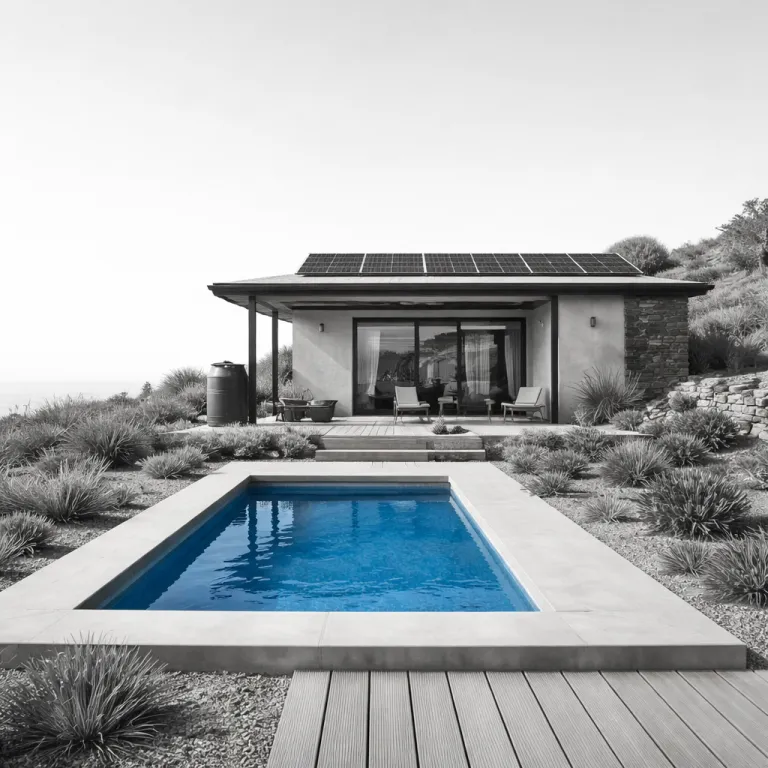
The 30 percent tipping point in sustainable luxury hotel travel
Business leisure travelers are now treating sustainable luxury hotel travel in the mid‑2020s as a baseline, not a bonus. When roughly 30 percent of global travelers consistently book a sustainability‑certified hotel, that share of demand starts to decide which hotels fill their rooms and which private pool suites sit empty at night. Booking.com’s 2023 Sustainable Travel Report, for example, found that 43 percent of respondents actively look for sustainability information when booking, suggesting that once around a third of guests behave this way, that “tipping point” begins to shape which properties win premium demand. For executives extending work trips, this shift means the first filter is often sustainability credentials, then private pool, then view.
Recent survey work from Washington State University’s Carson College of Business reported that close to 88 percent of travelers say sustainability influences how they travel, a figure that aligns with Booking.com listing tens of thousands of certified hotels that meet clear eco criteria. The Carson College’s 2023 Business Travel and Sustainability survey highlighted that a large majority of respondents consider environmental impact when choosing flights and hotels, reinforcing that sustainability is now a mainstream factor rather than a niche concern. In sustainable luxury hotel travel, that certification now functions as a hard check box on booking platforms, especially for high‑end properties where rates and expectations are high. A property without visible sustainability credentials risks being deselected long before its infinity pool or panoramic view hotel terrace has a chance to impress.
For private pool focused guests, this is not abstract; they want to explore options where water, energy and food are handled responsibly, without sacrificing privacy or service. They look for evidence of waste reduction programs, renewable energy systems and transparent reporting on water use before they confirm availability for their preferred rooms. At Six Senses Laamu in the Maldives, for instance, the resort reports that more than 90 percent of its electricity now comes from solar and that on‑site bottling eliminates hundreds of thousands of plastic bottles annually, showing how a high‑end villa with a plunge pool can still operate with a lighter footprint. A growing eco‑conscious community of travelers now compares hotels in Greece, the United Kingdom or Hong Kong by asking how each stay will reduce impact rather than simply how the pool will look at sunset.
Private pools under pressure: water, energy and waste in the spotlight
Private pools have always been one of the most resource‑intensive features in any luxury hotel, and the new wave of sustainable luxury travel is forcing a redesign of that equation. Heating a plunge pool through the night, filtering it, lighting it and treating it with chemicals can quietly undermine a hotel’s sustainability narrative, especially when guests experience a property that talks green but runs wasteful systems behind the scenes. For a discerning executive, that disconnect between message and guest experience is now a reason to move their travel budget elsewhere.
Leading hotels are responding with natural filtration pools, solar‑thermal heating and sensor‑based water management that align private indulgence with measurable sustainability. Six Senses Zighy Bay in Oman, for example, combines solar hot‑water systems with grey‑water reuse and reports that more than 80 percent of its solid waste is diverted from landfill through recycling and composting. 1 Hotel Brooklyn Bridge in New York, part of the same broader movement as 1 Hotel & Homes Hudson Valley, tracks energy performance in detail and has reported double‑digit percentage reductions in electricity use per occupied room after retrofitting efficient HVAC and lighting systems. These kinds of documented case studies show how eco‑friendly design, local materials and close work with nearby communities can turn a private pool suite into a low‑impact sanctuary rather than a symbol of excess.
For travelers comparing view hotels in Greece with a national park lodge in the United Kingdom or a harbour‑facing hotel in Hong Kong, the practical questions are similar. Does the hotel use rainwater capture for pools, and how is food waste handled in the villa dining program so that late‑night room service does not translate into unnecessary waste? Are there third‑party labels such as Green Key, LEED, Green Globe or EarthCheck that verify sustainability claims and confirm that the selected property’s private pools are part of a broader positive impact strategy rather than a marketing line about being a sustainable boutique‑style retreat. A simple pre‑booking checklist helps: confirm at least one credible certification, ask how much waste is diverted from landfill, and check whether the property publishes annual data on water and energy use for its pool suites.
How to read certifications, spot greenwashing and book better private pools
For anyone planning sustainable luxury hotel travel in 2026 and beyond, the most effective tool is a structured pre‑booking check that treats sustainability like rate and location. Start with certifications; Green Key focuses on operational sustainability in hotels, while programs such as LEED, Green Globe and EarthCheck assess building performance, resource use and long‑term impact on local communities. At one documented coastal resort in southern Europe that retrofitted its private pool suites with high‑efficiency heat‑pump systems and smart filtration, internal reporting showed pool‑related electricity consumption per occupied room fall by more than 20 percent over two years, illustrating how targeted upgrades can materially reduce the footprint of high‑end amenities.
Once certifications are confirmed, examine how the hotel talks about its pools, its food program and its waste reduction measures in detail. Properties aligned with regenerative tourism, such as Asilia Africa near national park locations, often publish specific data on water savings, renewable energy usage and food waste diversion, which gives travelers a concrete sense of positive impact per night. When a hotel in Copenhagen, a coastal retreat in Greece or a city tower in Hong Kong shares this level of transparency, it signals that eco‑friendly claims are backed by measurable sustainability rather than vague language about being an eco‑conscious or boutique luxury destination.
Finally, compare the guest experience you want with the sustainability profile you need, using curated resources that specialise in private pool stays. A quick three‑question filter can help: does the hotel disclose annual sustainability metrics, are private pools managed with renewable energy or efficient systems, and is there a clear plan for food and plastic waste reduction. Specialist review platforms that focus on elegant hotel rooms with private pools for a refined desert escape now evaluate both the view and the environmental footprint of each pool suite. For business leisure travelers, this means the selected hotel can deliver quiet rooms, strong food and beverage programs and a memorable view hotel terrace while still aligning with the broader shift toward sustainable luxury hotel travel and the expectations of a community that wants indulgence without unnecessary waste.