How Residential Design Is Transforming Private Pool Suites for Families
From house to hotel suite: when the pool behaves like a living room
In the best luxury suites, the private pool behaves less like a generic hotel amenity and more like a living room that happens to be filled with water. Residential architects and hotel designers now treat every pool decision as part of the overall floor plan, not a separate engineering problem. This shift sits at the heart of the new conversation between hotel pool design and residential-style villas, where the swimming pool becomes the emotional centre of the stay.
At La Darbia in Piedmont, Italy, the stone house structures and minimalist interiors echo local farmsteads, and the shared swimming pools are positioned as calm extensions of the living spaces rather than showpieces. The resort’s own materials describe the project as a “small rural village” with apartments opening directly onto gardens and pool terraces, which supports this house-like approach. The same residential logic now guides private villas and multi-bedroom suites worldwide, where a private pool is aligned with the sofa, the dining table and the terrace to create one continuous story of daily life. When a modern pool is treated like furniture, its edge, its height and even its stainless steel fittings are chosen with the same care as a chair or lamp.
Families booking a private villa or villa-style suite should read the floor plan the way they would for a new house, tracing the route from bed to pool deck and from kitchen to pool garden. A well-resolved pool view from the main room means you can watch children swimming while you cook, read or work, which is exactly how residential architects think about safety and supervision. In one recent guest review of a three-bedroom pool villa in Crete, a parent praised the “clear sightline from the kitchen island to the shallow end,” noting that it made solo parenting feel manageable. This is also why hotel designers increasingly consult landscape architects and interior design teams together, using 3D modelling and site analysis to ensure that pools, decks and living areas feel like one coherent, modern house rather than a cluster of disconnected hotel zones.
The threshold: steps, levels and the quiet power of the pool edge
The most sophisticated infinity pool experiences start with a simple question borrowed from residential design: how do you cross the threshold from interior to exterior. In a well-considered villa or suite, the level change between sofa and swimming pool is never accidental, because a single step down can create a powerful sense of privacy. Families feel this immediately when they slide open a glass door and step onto a pool deck that sits slightly below the bedroom, with the water surface hidden from neighbouring paths.
Residential architects often treat the overflow edge of a modern pool as a piece of joinery, not just a technical detail, because the way water meets stone or timber defines the mood of the entire terrace. In hotels, that same thinking produces infinity pools where the overflow edge doubles as a safety line, a seating ledge and a visual frame for the view, especially in tropical or beach locations. When you evaluate a private pool suite, look at photos that show the junction between floor and water, because a well-designed overflow edge usually signals that the rest of the pool design has been handled with equal care.
For families weighing an indoor versus outdoor private pool, the most useful comparison is how architects choreograph circulation between rooms and terraces. A semi-indoor swimming pool with large sliding doors can capture natural light like a conservatory, while an outdoor large pool with a shaded pool roof can feel more like a garden pavilion. As a rule of thumb, if the distance from sofa to pool steps is more than about 10–12 metres, the water will feel psychologically “separate” from family life. To make this more concrete, imagine a simple plan: bedroom and sofa zone on one side, terrace doors in the middle, then a short, direct path to the pool steps with no sharp corners or hidden changes in level. If that route looks longer or more complicated in photos or plans, the pool will probably feel like a separate zone during your stay.
The villa effect: when private pool suites feel like a real house
The strongest trend in high-end resort development is the pivot toward suites that feel like renting a fully fledged house. Villa specialists such as Haute Retreats report a clear shift from classic luxury hotels to private villas, driven by guests who want home-like privacy with hotel-level service. Hotel designers have responded by creating multi-room private villas and wing-like suites where the private pool sits at the heart of family life, not at the edge of a resort map.
At Amanvari in Baja California Sur, Mexico, early design material released by Aman and architects SANAA highlights vast terraces, deep overhangs and carefully framed pool views that blur the line between interior design and landscape. The swimming pool is aligned with living and dining spaces so that the water, the sofa and the dining table read as one continuous platform, echoing the way a modern house might be planned along a garden axis. Zannier Hotels Bendor on Île de Bendor in France follows a similar logic, letting the natural topography dictate where infinity pools and pool gardens sit, so that each private villa feels anchored to its site rather than dropped onto a generic plot.
Families should look for villa Mediterranean-style layouts, where a courtyard-like large pool or series of smaller pools connects bedrooms, play areas and shaded loggias. This is where a thoughtful pool roof, pergola or mature tree can turn a hot terrace into an all-day living space, especially for children who move constantly between swimming and indoor games. For a deeper dive into how different architectural philosophies shape the private pool experience, this analysis of three design philosophies reshaping private pools shows how rock, forest and rooftop concepts translate into real-world stays.
Material continuity, natural light and why the best hotel pools feel residential
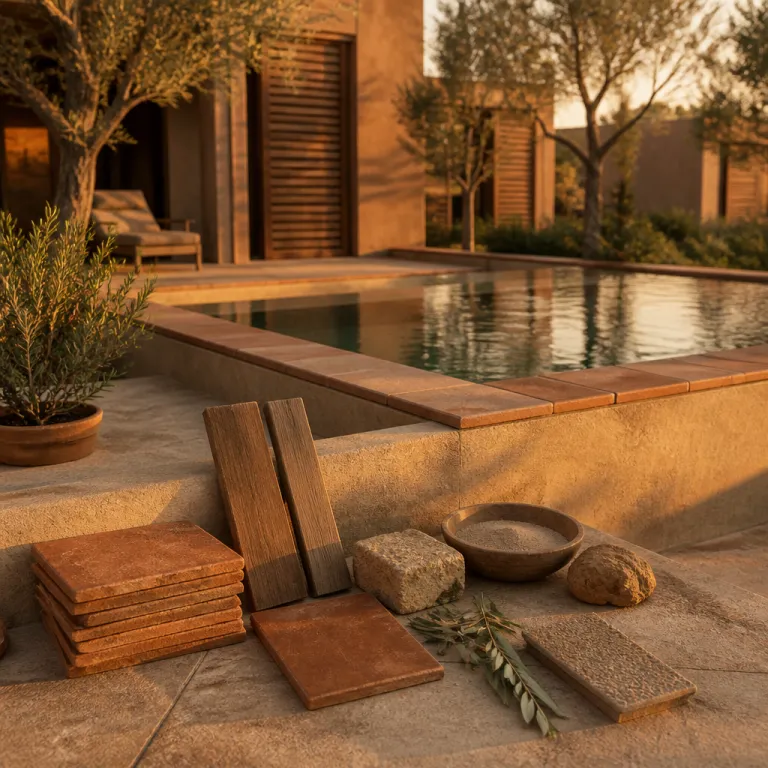
One of the clearest lessons hotel designers borrow from residential architects is the power of material continuity. When the same stone or timber floor runs from bedroom to terrace and right up to the pool edge, the swimming pool feels like a natural extension of the room rather than a separate zone. This is especially effective in family-focused villas and suites, where guests move barefoot between inside and outside all day.
La Darbia’s use of local pietra serena and terracotta shows how a restrained palette can make even shared pools feel intimate and house-like. In private villas, the most successful modern pool designs often repeat interior design details outdoors, from stainless steel fixtures that match indoor hardware to built-in benches that echo interior seating. Natural light is treated as a material in its own right, with skylights, clerestory windows and carefully placed openings ensuring that the water surface reflects changing daylight into living spaces.
For travellers, this means reading photos differently: instead of focusing only on the big infinity pool shot, study how the pool deck connects to the sofa, the dining table and the circulation routes children will actually use. A pool garden that shares planting species with the surrounding landscape will feel calmer and more authentic than a collage of unrelated tropical plants. When a swimming pool, its overflow edge and its surrounding furniture all speak the same design language, you are likely looking at a property where architects and interior designers have been part of the core design équipe rather than late-stage consultants.
How to read photos, plans and reviews when booking a private pool stay
Most travellers now start with a Pinterest search or a glossy hero photo, but residential architects would tell you to begin with the plan. In any villa-style resort or urban retreat, the floor plan reveals how the private pool relates to bedrooms, living spaces and neighbours, which matters more for families than the size of the infinity pool alone. A large pool that sits too far from the main living area can be less practical than a compact private pool that is always in sight.
When you scroll through pools online, look for images that show the pool deck in context: can you see the kitchen, the sofa, the children’s bedroom doors. A good pool garden layout will offer both sun and shade, with a clear route from interior to exterior that does not cross slippery steps or awkward level changes. Stainless steel railings, well-placed handholds and non-slip finishes are not glamorous, but they are the details that separate a family-friendly modern pool from a purely sculptural one.
Reviews can also reveal whether a private villa or collection of private villas truly feels secluded or whether the pool view is exposed to paths and neighbouring balconies. Trade publications such as Hospitality Design and Hotel Management have reported steady growth in private pool suites over the past decade, along with a clear price premium for rooms with direct water access, which underlines how much more you now pay for that water at your doorstep. For example, a 2023 Hospitality Design feature on resort development noted that “waterfront and private-pool keys can command double-digit percentage premiums over standard room categories,” reflecting sustained demand from families and couples. To make that premium worthwhile, use curated resources such as this guide to refined hotels with private pools, where the focus is on layout, privacy and architectural quality rather than just the presence of a swimming pool.

FAQ
Why do hotels incorporate private pools into suites and villas ?
Hotels incorporate private pools into suites and villas to offer exclusive experiences and attract luxury travellers who value privacy and direct access to water. For families, a well-placed private pool can turn a room into a self-contained retreat that feels closer to a modern house than a conventional hotel. This aligns with the broader move toward residential-style resort design, where pools are integrated into everyday living spaces rather than treated as separate amenities.
How does pool placement affect the guest experience for families ?
Pool placement affects how easily parents can supervise children, how much sun or shade the terrace receives and how private the water feels from neighbouring rooms. Proper placement enhances privacy, views and accessibility, echoing the way residential architects position a swimming pool in relation to a family living room or garden. When the pool deck sits just a few steps from the main sofa, the space works for both relaxed evenings and active daytime swimming.
Are private pools becoming more common in urban hotels ?
Private pools are increasingly common in urban hotels, especially in luxury properties that compete with high-end private villas. Designers often use plunge-style infinity pools or compact pools with an overflow edge on balconies and rooftops, borrowing ideas from dense city house projects. This allows guests to enjoy a pool view and a sense of seclusion even in the middle of a busy skyline.
What should I look for in photos and plans when booking a private pool room ?
When reviewing photos and plans, focus on how the pool connects to the bedroom, living area and any children’s rooms, not just on the size of the swimming pool. Check whether the pool garden or deck offers both shade and sun, whether there is a safe route from interior to exterior and whether neighbouring balconies overlook the water. A well-resolved layout will show clear, logical circulation and a pool that feels like part of the home rather than an afterthought.
How do residential architects influence hotel pool design today ?
Residential architects influence hotel pool design by bringing home-focused thinking about privacy, circulation and material continuity into resort and city projects. They help hotel designers treat the infinity pool, pool roof, pool deck and surrounding landscape as extensions of interior design, rather than separate engineering elements. This collaboration produces private villas and suites where the water, the rooms and the garden form one coherent living environment for guests.