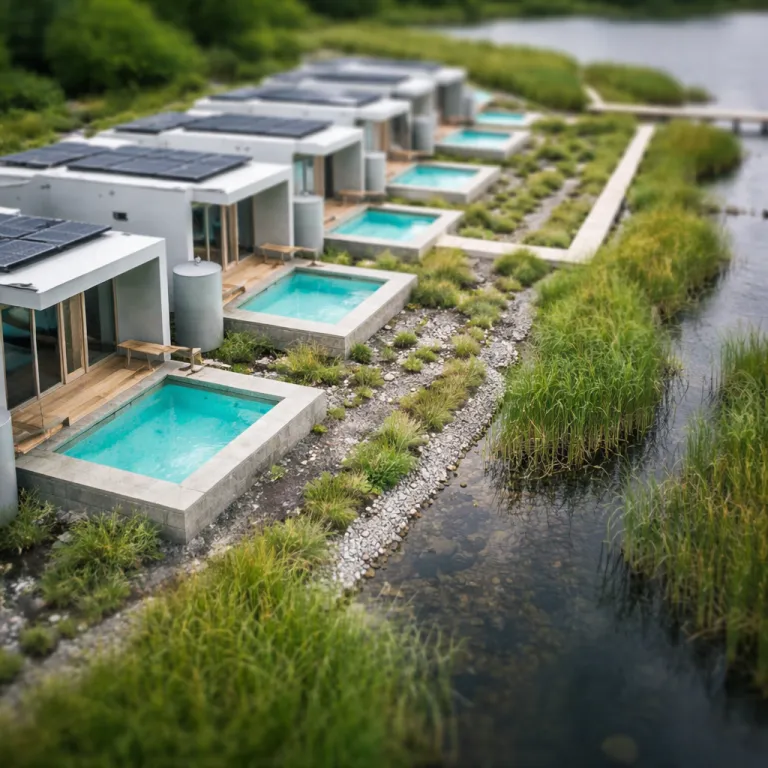
Sustainable private pool hotels: can luxury and ecology coexist?
The private pool paradox in sustainable travel
A sustainable private pool hotel stay can sound like a contradiction. When a single swimming pool is reserved for one guest or one family, the water and energy footprint can feel hard to justify for travelers who care about sustainability. Yet one in three guests now actively looks for sustainable hotels, and many still filter their search by private pool first when browsing eco friendly resorts and villas with pools.
This tension is reshaping the hospitality industry, especially at the luxury end where villas with pools, resort spa suites, and eco lodges compete for the same eco conscious traveler. Families want the seclusion of a terrace where the water is theirs alone, the children can splash freely, and the parents can relax without scanning a crowded beach. At the same time, they are reading about environmental impact, water conservation, and renewable energy, and they expect friendly hotels to show credible action rather than green tinted marketing or vague eco language.
Environmental researchers now treat the private pool as a serious case study, not a frivolous detail. Life cycle assessments, water usage studies, and energy consumption analyses show that an individual swimming pool can lose around 600 gallons (roughly 2,270 liters) of water per day through evaporation in hot climates, which is a sobering figure for any eco luxury resort. A 2023 Biology Insights review of residential and hotel pool performance in arid regions of the United States and Mediterranean, based on monitoring of more than 150 uncovered pools, reports daily evaporation in this range for exposed surfaces in peak summer. In dry zones, the combined water and energy use of pools can be up to five times higher than in temperate areas, according to a 2022 Chemical & Engineering News feature on pool footprints and regional climate effects, which means a sustainable private pool concept must be designed very differently in Dubai than on a rainy Atlantic island.
Water, energy and the real cost of a private plunge
For families comparing hotels online, the water footprint of a private pool is rarely explained with any clarity. A shared resort swimming pool might use about 20 m³ of water per day (around 20,000 liters), but that volume is spread across hundreds of guests, while a villa pool or plunge pool concentrates similar water use on a single guest party. Case studies in the journal Sustainability, which track hotel pool operations over full seasons in Spain, Greece, and Mexico with sample sizes of 10–25 properties, confirm this order of magnitude and highlight how occupancy patterns change the per-guest impact. When 30 percent of travelers now book sustainability certified stays, as recent hospitality industry analysis from global booking platforms indicates, this imbalance becomes a central question rather than a niche concern for sustainable private pool hotels in arid climates and coastal destinations alike.
Energy use is the second half of the equation that any eco conscious private pool property must confront honestly. Heating, filtration, and chemical treatment all consume energy, and in many luxury hotels this still comes from fossil fuel based grids rather than renewable energy systems. Some resort spa complexes now install variable speed pumps, solar heating panels, and smart filtration cycles to cut energy demand, while environmental agencies encourage pool covers to reduce evaporation and lower both water and energy losses. A 2021 collaborative project between a European environmental agency and a major pool equipment manufacturer, covering 40 hotel pools across southern Europe, reported electricity savings of 30–45 percent when variable speed pumps and optimized filtration schedules replaced older fixed speed systems.
Families should ask direct questions before booking any eco friendly private pool resort. Does the hotel use rainwater harvesting to top up pools, or is every liter drawn from stressed local aquifers that also serve nearby villages and national park ecosystems? Are there clear policies on water conservation, leak detection, and pool cover use, or is the sustainable label applied simply because the restaurant serves locally sourced vegetables and the spa offers a nature inspired treatment menu? A thoughtful traveler will read detailed sustainability pages, then compare them with independent reporting on how one in three travelers now books sustainable stays and what this means for private pool hotels on specialist platforms, including recent Chemical & Engineering News coverage of pool footprints and demand for lower impact designs.
Where eco luxury pools work – and where they do not
Some properties now treat the sustainable private pool challenge as a design brief rather than a marketing slogan. In parts of Costa Rica, for example, eco lodges and sustainable hotels near a national park often build compact plunge pools fed partly by rainwater, shaded by dense gardens, and filtered through low chemical systems that respect surrounding nature. These resorts usually combine villas with pools and shared swimming pool areas, allowing guests to choose between private indulgence and lower impact communal spaces during a single stay, and several properties report cutting pool water use by 25–35 percent after installing covers and rainwater storage tanks.
Elsewhere, on a private island or remote beach, the best eco luxury resorts use renewable energy to offset pool operations and protect fragile marine environments. Solar panels, wind turbines, and sometimes geothermal systems power pumps and resort spa facilities, while greywater systems and rainwater collection reduce the draw on local freshwater sources. Environmental researchers working with pool equipment manufacturers now promote eco friendly pumps, smart controls, and natural filtration basins as part of a broader sustainability strategy that also covers food waste, locally sourced menus, and staff training. One Indian Ocean island resort, documented in a 2020 Sustainability case study, cut pool related emissions by more than 40 percent over three years by switching to solar thermal heating, installing variable speed pumps in all villas with pools, and integrating a lagoon style shared swimming pool that reduced the number of large private basins.
Not every claim stands up to scrutiny, and families should be wary of vague eco language around water and energy. A hotel that markets itself as an eco friendly resort because it has a yoga deck and a plant based restaurant, but still fills dozens of large villas with pools in a drought prone region, is shifting the environmental impact onto the community. Before you post Instagram stories from a turquoise terrace or tap view post on a dreamy infinity pool, ask whether the property publishes data on water conservation, whether it partners with environmental agencies, and whether its friendly hotels group has a credible sustainability roadmap rather than a glossy brochure. A simple internal test is whether the resort explains how it manages pool evaporation, energy sourcing, and wastewater in the same detail that it describes spa treatments and room categories.
How to book a private pool with a cleaner conscience
For a family planning sustainable travel, the goal is not moral perfection but informed choice. A private pool hotel stay can be more responsible when you choose destinations where water is abundant, energy is largely renewable, and hotels are transparent about their environmental impact. Islands with strong grid level renewable energy, coastal regions with high rainfall, and resorts integrated into protected nature corridors often have a better starting point than desert cities building vast resort offers around artificial lagoons, especially when you are comparing sustainable private pool hotels in arid climates with those in wetter regions.
When you evaluate hotels, move beyond the hero shot of the swimming pool and read the fine print. Look for clear statements on sustainability, including whether the resort spa uses solar heating, whether villas with pools are covered when not in use, and whether eco lodges on a private island limit pool sizes to reduce evaporation. Ask if the hotel collaborates with environmental researchers or national park authorities, and whether it invests in water conservation projects that benefit both guests and local communities. Descriptive image captions and alt text on hotel websites that mention pool covers, rainwater tanks, and native planting can also signal that design and operations have been considered carefully.
Practical questions matter more than poetic taglines when you are balancing luxury and ecology. Does the hotel use variable speed pumps and energy efficient systems, or are pools running on outdated equipment that wastes energy day and night? Are gardens irrigated with recycled water, are locally sourced ingredients a core part of the restaurant philosophy, and does the property publish answers to basic questions such as “How can I make my pool more sustainable?”, “Do pool covers help conserve water?”, and “Are saltwater pools more eco-friendly?” without hiding behind jargon? For families who care, a strong test is whether the property feels as thoughtfully engineered as the elegant Oia hotels with private pools that combine seclusion, view, and sustainability in a way that respects both guests and the landscape, and whether its sustainability information is as easy to find as its booking button.
Key figures behind sustainable private pools
- Average daily water loss from evaporation in an uncovered swimming pool can reach around 600 gallons (approximately 2,270 liters), which makes pool covers one of the simplest tools for water conservation in any sustainable private pool project (Biology Insights, 2023 global review of residential and hotel pools in hot climates, sample size >150 pools).
- In arid climates, combined water and energy use for pools can be up to five times higher than in temperate regions, so sustainable hotels in desert or dry island locations must invest more heavily in renewable energy and water saving technologies to achieve the same environmental impact reduction (Chemical & Engineering News analysis of pool footprints and regional climate effects, 2022 feature drawing on data from North America, the Middle East, and southern Europe).
- Public pools typically consume around 20 m³ of water per day, but this volume is shared among many guests, while private villas with pools often approach similar daily use for a single family, which raises difficult questions for eco luxury resorts that market exclusivity as their main selling point (Sustainability journal case studies on hotel pool operations and occupancy in Spain, Greece, and Mexico, with 10–25 properties monitored per region).
- Environmental impact assessments of private pools now combine life cycle analysis, water usage studies, and energy consumption data, and early results show that variable speed pumps, solar heating, and rainwater harvesting can significantly reduce both emissions and operating costs for hotels and eco lodges that adopt them in a systematic way (collaborative projects between environmental agencies and pool equipment manufacturers in Europe and North America, 2019–2022).